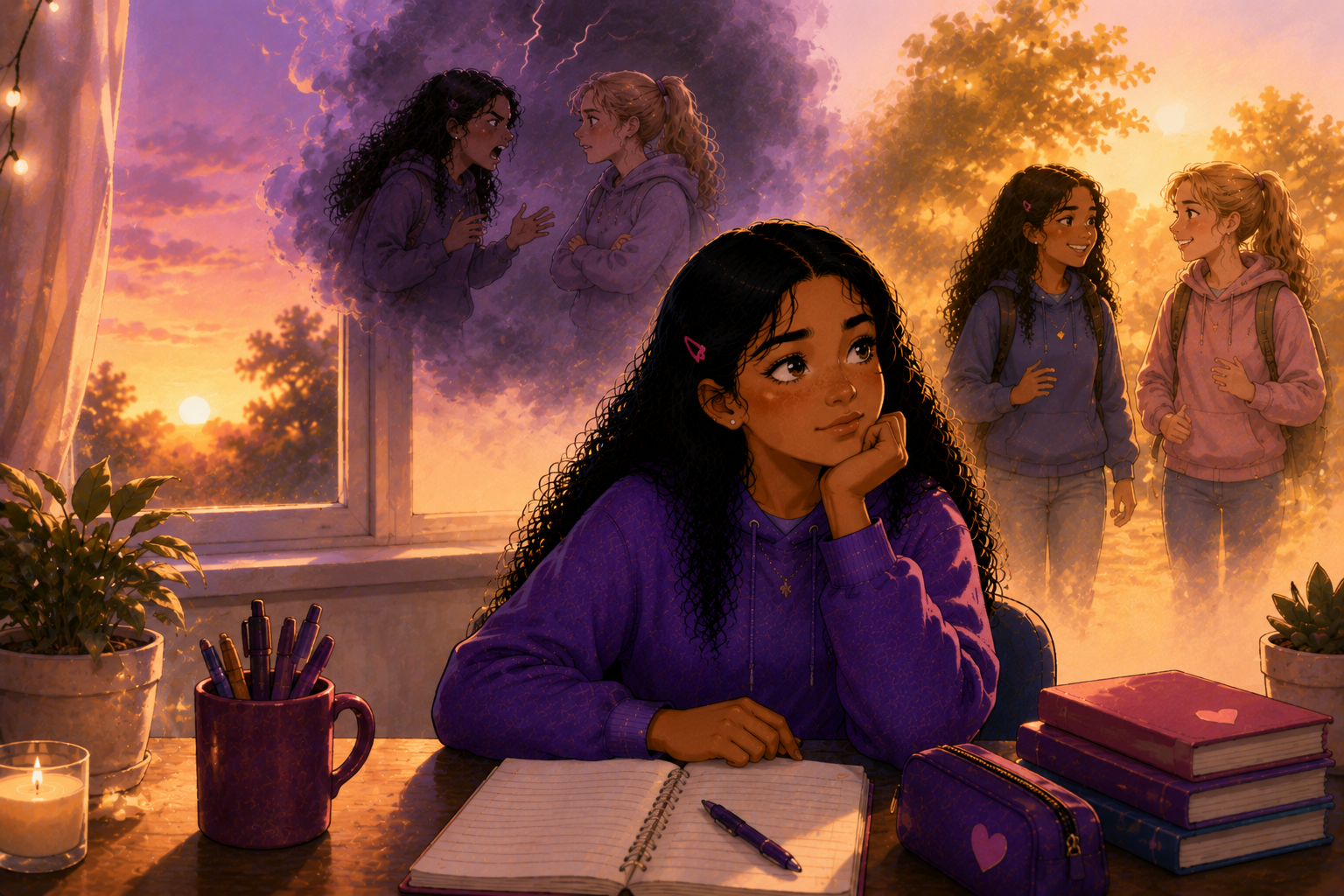
One of the most important things we are trying to teach girls through Bloom Code is this: Feelings are real. But feelings should not control every action we take.
As adults, we sometimes forget how intense emotions can feel during childhood and adolescence. Friendships become everything. Being excluded feels enormous. Jealousy feels shameful. Anger feels consuming. Hurt lingers. Feelings are often categorised into two; good and bad. but the truth is every emotion is allowed to take up space in our hearts. And yet, many girls are taught only two extremes. Either “Be nice, or “Stand up for yourself no matter what.” Emotional intelligence often exists somewhere in between. In one of our recent Bloom Code sessions, we explored this idea through case studies, or a better word, storytelling.
The Story Of Nithia
Nithia had always been part of the same small group of friends. They ate together during recess, worked on projects together, and somehow, everyone in the group already knew their place. Nothing was ever officially said, but there was comfort in the familiarity of it all. Then one day, a new girl joined the class. Her name was Chloe.
At first, Nithia liked her. Everybody did. Chloe was confident in a way that seemed effortless. She was funny, easy to talk to, and somehow always knew what to say. Within weeks, she had become part of the group. But slowly, something started to shift. Nithia noticed that when Chloe spoke, everyone listened. When Chloe joked around, everyone laughed. And little by little, Nithia began feeling quieter inside her own friendships.
She hated feeling that way. Because Chloe had not actually done anything obviously wrong. At least not at first.
Then one afternoon, while they were working together after school, Nithia excitedly shared an idea she had been thinking about for a class project. It was something she had spent time planning and imagining in her head for days. Chloe listened carefully. She smiled. And Nithia felt happy someone understood her excitement.
But the next day, during class discussion, Chloe shared the idea openly as if it belonged to her. The teacher praised it. The group loved it. And Nithia sat there frozen.
Maybe Chloe did not mean it that way. Maybe she forgot where the idea came from. Or maybe she knew exactly what she was doing. Nithia did not know. What she did know was that something inside her changed after that.
The hurt stayed with her longer than she expected. Everything Chloe did started irritating her. Every laugh felt louder. Every compliment Chloe received felt personal. And slowly, Nithia stopped trusting the people around her too.
She found herself replaying conversations in her head. Wondering if her friends even noticed how hurt she was. Wondering if anybody would care even if they did.

Path One: Emotional Reaction
In the first version of the story, Nithia confronted Chloe publicly. What began calmly quickly became emotional. Everything Nithia had been carrying spilled out at once. The group became uncomfortable. Some stayed silent. Some tried to stop the argument. Some quietly walked away. Later, Nithia realised something painful. Most people were no longer talking about her hurt. They were talking about her reaction.
This opened up a powerful discussion with the girls. We talk about how emotional reactions can sometimes bury the real pain underneath. Not because the feelings are invalid — but because strong reactions often become the thing people focus on most.
Path Two: Boundaries And Self-Respect
In the second version, Nithia still felt hurt. Nothing magically became okay. But instead of confronting Chloe publicly, she paused. She spoke privately to her teacher. She became more careful about who she trusted. She stopped sharing her ideas so quickly. Not out of hatred. But out of self-protection.
This was an important distinction.
We did not want the girls to think that “being kind” means staying silent or allowing people to mistreat them. Instead, we explored the idea that protecting your peace and protecting your boundaries can exist without cruelty.
The Main Lesson
At the end of the session, we introduced the key message:
Feelings are temporary.
Actions have consequences.
Girls cannot always control feelings like anger, jealousy, disappointment, or hurt. Emotions are human, and difficult feelings are part of growing up. In moments of pain, emotions can feel overwhelming, especially when friendships, trust, and belonging are involved.
But while we may not always control what we feel, we can learn to control what we do with those feelings. We can choose what we say, how we respond, and the actions we take in difficult moments. And those choices can shape our friendships, affect trust, impact other people, and influence the kind of relationship we have with ourselves.
This was not a lesson about simply “being good” or staying quiet to avoid conflict. It was a conversation about emotional regulation, self-respect, boundaries, and learning that we cannot control the behaviour of other people.
What we can control is the kind of person we choose to become.

Why These Conversations Matter
A lot of emotional struggles begin quietly. Not through major events, but through everyday experiences that slowly shape how children see themselves and others. Feeling excluded, comparing themselves to other people, losing trust in friendships, reacting before thinking, or simply not knowing how to handle hurt can deeply affect the way girls move through the world.
Children do not always need lectures or perfect answers. Sometimes, they simply need safe and grounded spaces to think, reflect, ask questions, and talk honestly about real emotions.
That is what Bloom Code is trying to create.
Not perfection. Not “good girls.” But girls who understand themselves a little better. Girls who know that emotions are human, difficult moments are part of life, and that even in those moments, their choices still matter.
Reflection Questions We Explored
At the end of the session, we invited the girls to reflect together:
- Which path felt more realistic?
- Which path felt harder?
- Have you ever reacted emotionally and regretted it later?
- Why do emotions sometimes feel “bigger” in the moment?
- What helps people pause before reacting?
- Can someone protect themselves without becoming cruel?
There were no “perfect” answers. Only honest conversations.
And sometimes, that is where the most meaningful learning begins.